Forged from Fire: A Behind-the-Scenes Look at Fire Weather Forecasting
por Aspen Nielsen | Actualizado: 03/16/2026 | Comentarios: 0
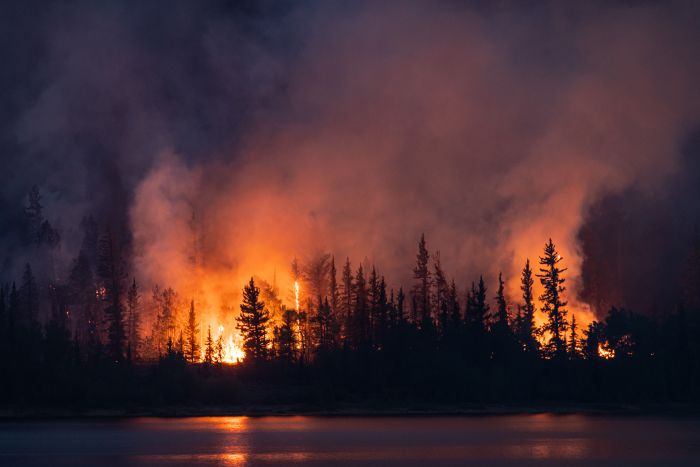
It’s a still-glowing-red cigarette carelessly tossed out of a car window. A wind-toppled utility line. A lightning strike touching the parched, summer earth. All it takes is a single spark.
In a split second, fire ignites.
As the fire is intensifying, a team of experts quickly mobilizes. Hotshot firefighting crews, with their extensive knowledge of wildfires, assess the terrain. Emergency managers coordinate air and ground resources. Insurance companies begin risk assessments.
Amidst the experts is another team whose work rarely appears in the news footage, but shapes many of the crucial decisions on the frontlines: the fire weather meteorologists. Equipped with models, firsthand knowledge, and data from a growing network of weather stations, these meteorologists provide a detailed forecast for the fire’s path.
Maritza Arreola Amaya at Western Weather Group is one of these meteorologists. As a California-native, Maritza described a 2010 gas fire in San Bruno that was a catalyst for her desire to study how fires spread and what can be done to protect lives and livelihoods. Today, she applies that same drive to her career in the specialized field of fire weather meteorology. It is here that she not only creates forecasts during active fire events but also works to help utility companies understand and plan for fire risk, ultimately allowing them to implement mitigation strategies before the first sparks fly.
“Every time there is a big fire, it reminds me why I study and forecast for fire weather. My passion is reignited,” explained Maritza. “I want to help people. In the long run, I am helping them by providing good forecasts so that utility [companies] can make better decisions.”

Maritza Arreola Amaya, Western Weather Group
The Difference Between Fire Weather and Traditional Forecasts
While rooted in the same science, fire weather differs from traditional weather forecasting. Traditional forecasters often rely on a network of nearby weather stations, typically located at places with critical infrastructure, such as airports. But fire weather requires a different level of precision. A weather station a few miles away from an active fire event may tell a slightly different story than one in the heat of the fire. When the stakes are high, even the most subtle differences matter.
Data are a crucial component to fire weather meteorology. As Maritza put it, “If the weather data [are] incomplete or unreliable, we lose situational awareness about the fire weather conditions in the area.”
Both traditional forecasters and fire weather forecasters monitor common meteorological parameters such as temperature, relative humidity, precipitation, and wind. Perhaps unique to fire weather, meteorologists in this discipline measure the moisture and temperature of vegetation that could feed the fire’s growth, which they refer to as “fuel.”
To capture these measurements, Western Weather Group deploys automated weather stations (AWS) across fire-prone landscapes, each equipped with rugged data loggers like the CR1000Xe. Built to operate in some of the harshest conditions imaginable, these stations continue collecting and transmitting data even as temperatures spike, winds shift, and smoke thickens the air.
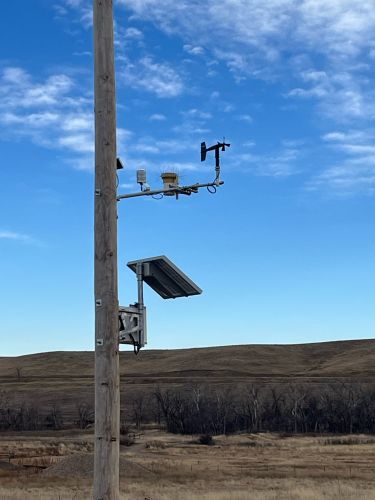
Photo courtesy of Western Weather Group
In fire weather forecasting, data become part of a bigger picture about how a fire may ignite or behave next. Most fire weather metrics and indices, such as the Fosberg Fire Weather Index, are sensitive to data quality. In practice, this means that using properly installed, high-quality instrumentation that is regularly maintained and calibrated is critical to creating data-informed fire weather forecasts.
Seeing through the Smoke to Understand the Risk
Assessing fire risk takes more than just weather and fuel data. It also takes an intimate knowledge of the terrain. Maritza explained, “[A common] misconception is that it needs to be extremely hot, dry, or windy for fire weather to be critical. But fires can ignite and spread during moderate winds or temperatures if other factors align with it. For example, if a fire started on a slope in very dry fuels, it could easily spread, even if [winds] were light and temperatures were moderate.”
When fire risk is high, decisions must be made confidently and quickly. The caveat is that those decisions are only as strong as the forecasts that support them. To build forecasts, meteorologists must observe and synthesize an immense amount of data and contextual factors in real time.
A Partner in Fire Weather
To give meteorologists, and ultimately decision-makers, a deep level of insight, a comprehensive fire weather program must be formed. At a high level, this program consists of multiple interconnected components, such as:
- Strategic placement of weather stations in high-risk areas
- Rugged, durable instrumentation capable of continuously operating, even in extreme conditions
- Proper installation to ensure data quality and reliability
- Ongoing maintenance and regular calibration
- Around-the-clock expert analysis to interpret not just ever-evolving atmospheric conditions, but what they actually mean for fire risk on the ground
For many utility companies and other organizations, managing this program internally can quickly become overwhelming and confusing. As a full-service, end-to-end weather intelligence provider, Western Weather Group brings Campbell Scientific durability and ruggedness to fire monitoring. Paired with their expert installation, maintenance, and forecasting teams, Western Weather Group provides U.S. organizations with dependable data.
As Maritza says, “Having reliable weather intelligence gives decision-makers confidence that they’re making the best decisions they can to protect lives and property.”


Acerca del autor
 Aspen Nielsen is a marketing specialist at Campbell Scientific, Inc., where she focuses on creating customer-centered campaigns, delivering meaningful content through data-driven analytics, and supporting cross-functional teams. She joined the company in 2022 and stepped into her current role in 2025 after earning her MBA from Western Governors University. When she’s not working, Aspen enjoys hiking in the mountains, painting landscapes, reading novels, and spending time with her beloved cat, Nova.
Comentarios
Please log in or register to comment.